


FIT’NG Together
FIT’NG Together is the umbrella term for events organized by the FIT’NG Student and Trainee committee. Through these events, we aim to create a community space to showcase cutting-edge FIT research, promote the professional development of FIT’NG trainees, and serve as a networking space for folks at all career stages. FIT’NG Together events are 60 minutes and happen monthly over Zoom.
For membership information, see our membership page.
FIT’NG members can access recordings from past events can be found when they login to the members-only webpage.
The FIT’NG Together series include:
- Practicals: Tutorials on techniques relevant to FIT’NG research. Practicals will be recorded and included on the website for members only.
- Paper Discussions: Discussions of recent cutting-edge research with the author(s) of the paper.
- Work in Progress (WIPs): Opportunities for trainees to present their preliminary work and get advice and feedback from experienced researchers. WIPs will enable trainees to present unfinished projects and get constructive and supportive feedback from the audience.
- Other Special Events: Includes “fireside” chats with established researchers, data blitzes, advice panels, and more!
How can I ask for my mentor or program to pay for my membership?
We want FIT’NG memberships to be beneficial to trainees’ professional development. We recommend spelling out the membership benefits as well as the added benefits provided by FIT’NG Together (listed below) when asking for approval to purchase your membership through your department/program/lab:
-
- Access to tutorials on the latest methods for Fetal, Infant, and Toddler imaging and analysis (Practicals).
- The opportunity to present your work to experts in the FIT field and receive constructive feedback (Works In Progress or WIPs). This is especially important for trainees at universities that do not have a long tradition of doing this kind of research.
- Stay up to date on major advancements in the field, and have the opportunity to meet/network with the persons driving these advancements (Paper Discussions). “
Upcoming FIT’NG Together Events
FIT’NG Together Recording Disclaimer
Please note that certain FIT’NG Together events are recorded. By your presence at a FIT’NG online event, you consent to be photographed, filmed and/or otherwise recorded. Your registration constitutes your consent to such photography, filming and/or recording and to any use for any purpose in accordance with the Society mission and standard of conduct. You are welcome to keep your camera off during these events, you and not the Society, is responsible for these setting options
Past FIT’NG Together Events
FIT’ng Together Presents:
Overcoming Challenges and Dilemmas in Open Science: Practical Approaches to Preregistration
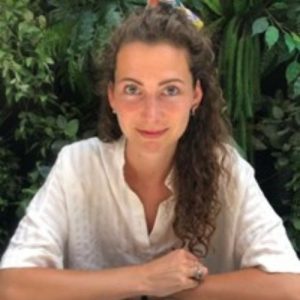
Dr. Lisanne van Houtum
April 22, 2026 at 11:00am EST
Open science practices such as preregistration are increasingly encouraged to improve transparency, reproducibility, replicability, and credibility in scientific research. However, researchers often encounter practical challenges when attempting to apply these principles in complex, real-world projects. Questions often arise about how detailed preregistrations should be, how to distinguish confirmatory from exploratory analyses, and how to handle necessary deviations when research evolves.
In this practical session, Dr. Lisanne van Houtum will discuss common dilemmas researchers face when implementing preregistration and other open science practices, drawing on examples from large-scale neuroimaging and developmental psychiatry projects. The session will focus on pragmatic strategies for designing preregistrations that balance transparency with flexibility, managing deviations from planned analyses, and maintaining scientific rigor. The discussion will provide guidance for researchers seeking to integrate open science principles into their own work.
FIT’ng Together Presents:
A joint preview of FIT’NG and ICIS 2026: Why stay later or come early to attend both conferences?
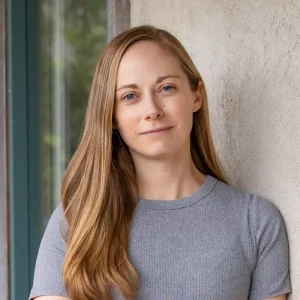
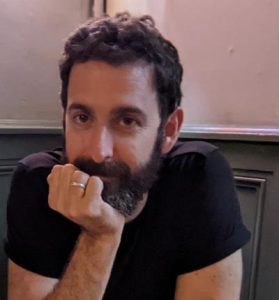
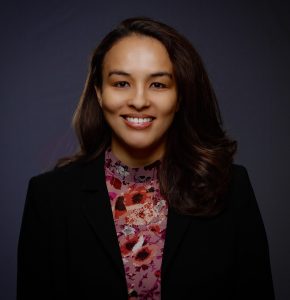
Dr. Lorenzo Fabrizi (FIT’NG) Dr. Lindsey Powell (FIT’NG) Dr. Ori Ossmy (ICIS) Dr. Natalie Brito (ICIS)
April 14, 2026 at 11:00am ET
This year, FIT’NG and ICIS, two societies that showcase research on early development, have teamed up to host their respective conferences in Panama in July 2026! During this one-hour virtual event, Programming Chairs from both societies will briefly introduce their society’s mission, provide an exclusive sneak peek into the program for both conferences that highlights sessions and events of interest to both societies, and discuss what extra insight attendees might gain through attending both, rather than just one, meeting. The event will end with a 20-minute Q&A period which will allow attendees to gain insight into plans for both conferences. Members of both ICIS and FIT’NG are warmly invited to attend.
Recording available to Members and Non Membeers
FIT’ng Together Presents:
Open science practices and their application in FIT neuroimaging

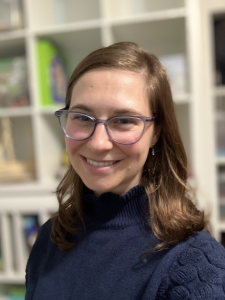
Dr. Brian Nosek Dr. Lindsay Bowman
March 25, 2026 at 11:00am EST
Improving rigor, transparency, integrity, and reproducibility through open science is a critical, ongoing goal across research disciplines. In fetal, infant, and toddler (FIT) neuroimaging, a rapidly evolving conceptual, technological, and methodological landscape makes it especially important, and sometimes especially challenging, to adopt open science tools and practices. In this session, Dr. Brian Nosek- co-founder of the Center for Open Science- will offer a big picture overview of open science practices, the problems they are designed to address, and why they matter. Then, Dr. Lindsay Bowman- FIT neuroimager and FIT’NG board member- will facilitate a conversation focused on what open science can look like in FIT neuroimaging specifically, including common barriers and FIT’NG-relevant strategies for implementation.
FIT’NG Together Series:
How to write an award-winning abstract
Thursday, Feb 5th at 5pm GMT /11am Central US
Dr. Nadège Roche-Labarbe
Each year, the FIT’NG program committee (and those of your other conferences) selects the abstracts that will be presented orally, as well as those that will be included in the selection of posters evaluated during the conference for the Best Poster Award. But how are these abstracts evaluated and selected? How do you prepare a good abstract? What distinguishes a good abstract from an award-winning abstract? And how are the Best Poster Awards evaluated? We will answer these questions to help you stack the odds in your favor!
FIT’NG Together: Functional Analysis Fall Series
Neural Synchrony
Dr. Stefanie Höhl Verena Schäfer

Dr. Sam Wass Dr. Ira Marriott-Haresign
Wednesday, December 10th at 10am EST
Social interactions play an important role in early development, influencing how infants and young children attend and learn from their environments. Hyperscanning, or recording from two interacting brains at once, can provide novel insights into dynamic, social interactions between partners, including infants and their caregivers. In the first part of the session, Dr. Sam Wass and Dr. Ira Marriott-Haresign will share their research using EEG hyperscanning in young children, discussing what it measures and the importance of linking neural measures to behavior. Then, Dr. Stefanie Höhl and PhD student Verena Schäfer will introduce fNIRS hyperscanning methods and the relative advantages and disadvantages of different neuroimaging modalities for understanding interpersonal neural synchrony. Following this, there will be a practical demonstration from Dr. Höhl’s group introducing a pipeline to calculate wavelet transform coherence (WTC) as a measure of interpersonal neural synchrony.
FIT’NG Together: Functional Analysis Fall Series
Brain Age Prediction
Dr. Huili Sun Dr. Kiho Imen

Thursday, December 4th at 10am EST
Short lecture and practical from experts on applying brain age prediction methods to fetal and infant neuroimaging data (sMRI & fMRI).
FIT’NG Together: Functional Analysis Fall Series
Encoding models for understanding high-level representations in early development
Dr. Frederik Kamps Dr. Sarah Jessen
Tuesday, November 18th at 11am EST
A fundamental goal for developmental cognitive neuroscience is understanding how representations emerge and change across development. To this end, researchers may leverage encoding models to formally model how stimulus features are represented in the brain (as opposed to decoding models, where stimulus features are predicted from brain activity). However, implementing encoding models in developmental neuroimaging is challenging, as these approaches often require substantial amounts of task-based data per participant, which is difficult to collect with infants and toddlers. To that end, researchers are increasingly using naturalistic, child-friendly paradigms that better capture attention relative to traditional paradigms, increasing data quantity and quality. In this session, we will hear from two researchers taking just this approach. First, Freddy Kamps will provide examples of how encoding models can be successfully applied to study the development of high-level visual responses even with limited amounts of functional magnetic resonance imaging (fMRI) data collected while young children watch a short, child-friendly movie. Second, Sarah Jessen will provide a step-by-step introduction to using linear encoding models to investigate neural tracking responses in infant electroencephalographic (EEG) data. Finally, Sarah will further provide a concrete demonstration of how these encoding models can be implemented with EEG data using MATLAB.
FIT’NG Together: Functional Analysis Fall Series
Functional alignment as a tool to improve and expand your analyses with FIT data
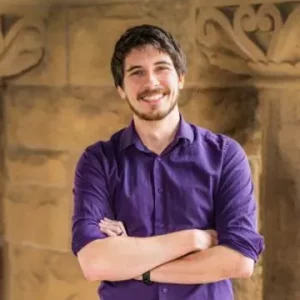
Dr. Cameron Ellis
Monday November 3, 2025 12:00 pm EST
Understanding what is common across individuals is a central motif of developmental cognitive neuroscience. Functional alignment offers a unique way to evaluate similarities across participants. Functional alignment methods find a data-driven mapping between participants such that you can take the brain activation in one participant and make a guess about what that activation will look like in another participant’s brain. Beyond prediction, these methods allow you to evaluate the similarity of individuals to a group and to enhance the signal of your dataset. In this talk I will give a brief introduction to functional alignment methods and how they have been used in fMRI. I will then give a brief walk through of the resources available to help you conduct functional alignment with your data. Notably, functional alignment methods are agnostic to modality and can be applied to any neuroimaging approach.
Link to Google Colab notebook demonstrating code for functional alignment (shared response modeling)
FIT’NG Together
From Scan to Structure: Infant MRI Analysis with InfantFreeSurfer
Dr. Lilla Zöllei Dr. Istvan N Huszar
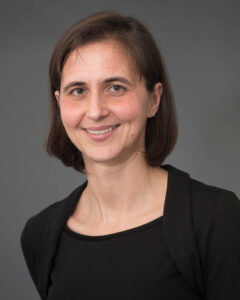
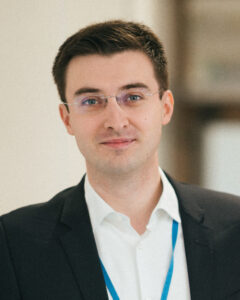
Tuesday June 17 , 2025 11:00 am EST
InfantFreeSurfer is an automated image analysis pipeline designed for processing T1-weighted MRI scans of children aged 0–3 years. It extends the FreeSurfer framework with infant-specific image processing solutions to accommodate the rapid anatomical changes and low tissue contrast characteristic of early postnatal brain development. The pipeline performs volumetric segmentation, cortical surface reconstruction, and extraction of quantitative neuroanatomical measures.
This seminar will provide an overview of the methodological foundations of InfantFreeSurfer, demonstrate its application to infant neuroimaging data, introduce new tools soon to be integrated into the framework, and discuss considerations for quality control and data interpretation.
Come with questions!
FIT’NG Together
Getting Started with OPM-MEG for FIT Research
Dr. Chiara Capparini Dr. Christine Embury Megan Evans
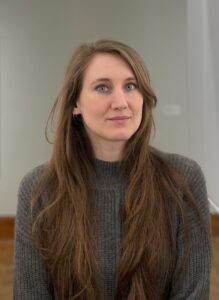
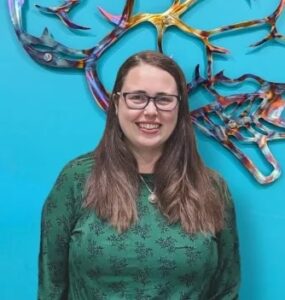
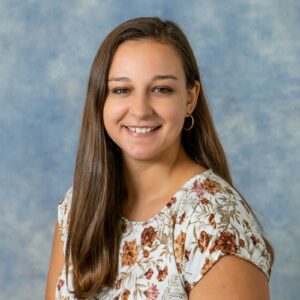
Tuesday June 3, 2025 11:00 am EST
Optically Pumped Magnetometers Magnetoencephalography (OPM-MEG) is a non-invasive neuroimaging technology that has shown the potential for high-quality data collection at both a high spatial and temporal resolution in adult populations. However, despite its promise for early childhood research, its application to fetal, infant, and toddler research is still emerging. In this panel discussion, speakers Dr. Chiara Capparini, Dr. Christine Embury, and Ph.D. candidate Megan Evans will discuss their experiences in adapting OPM-MEG for use in FIT neuroimaging research, including practical considerations and limitations.
FIT’NG Together Paper Discussion
A Uniform Approach to FIT Demographic Data Across Distinct Contexts
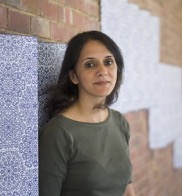
Dr. Leher Singh
May 20, 2025 11:00 am EST
Collecting and reporting demographic data are a vital part of any FIT neuroimaging study. However, relevant demographic characteristics may differ by location, culture, and environment. Join Dr. Leher Singh as she discusses a framework to standardize demographic reporting for FIT populations across distinct contexts. If you would like to preview the paper before the discussion, please visit: https://doi.org/10.1037/dev0001623.
FIT’NG Together Panel Discussion
Recycling Archival FIT Neuroimaging Data to Generate New Insights
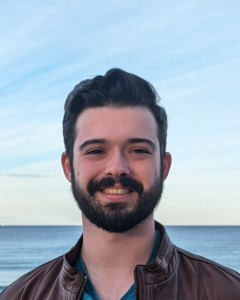

Dr. Dashiell Sacks Dr. Laura Cabral
April 22, 2025 11:00 am EST
In honor of Earth Day, join us to learn how existing data can be processed in out-of-the-box ways to extract new measures. For this session, panelist Dr. Dashiell Sacks will briefly present on how resting-state EEG data can be processed to extract the aperiodic component. Then, panelist Dr. Laura Cabral will briefly explain how resting-state fMRI data can be processed to extract the nT2*, an estimate of brain tissue iron. We will then proceed into a moderated Q&A.
FIT’NG Together
Hippocampal encoding of memories in human infants
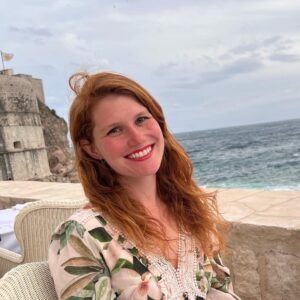
Dr. Tristan Yates
April 10, 2025 12:00pm EST
Join Dr. Tristan Yates and colleagues to discuss the results of their new paper in Science that uses awake infant fMRI to understand early memory. After a brief presentation, we will open up for questions and discussion, including ideas for future work.
FIT’NG Together Modality Introduction Series
MRI for global health : UNITY (Ultralow field Neuroimaging In The Young)
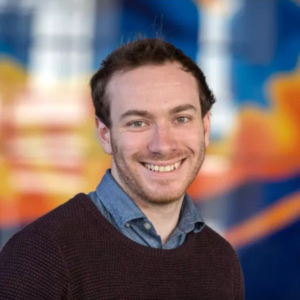
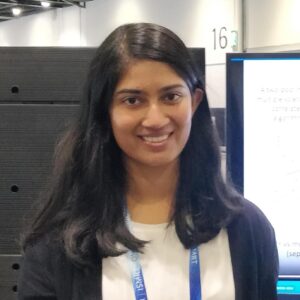
Dr. Niall Bourke Sharada Balaji
February 25, 2025 at 11:00am EST
MRI is essential for studying brain development and disease, but access remains limited in many parts of the world. Ultralow-field (ULF) MRI offers a cost-effective solution, expanding neuroimaging to resource-limited settings and enabling new approaches to studying the developing brain. By integrating technological advances with a global network, the UNITY project aims to make neuroimaging more accessible and impactful worldwide.
In this talk, Dr Niall Bourke (Imperial/Kings, United Kingdom) will first present UNITY’s efforts to centralize data storage and automate standardized neuroimaging workflows, enabling large-scale neuromodelling to address global health challenges. Sharada Balaji (UBC, Canada) will then discuss how MRI changes at ULF, challenges of imaging in diverse environments—including neonates—and myelin-sensitive techniques developed for the UNITY project and multiple sclerosis.
FIT’NG Together
SPONTaneous Activity in Brain Development – What can we infer from rodent models?
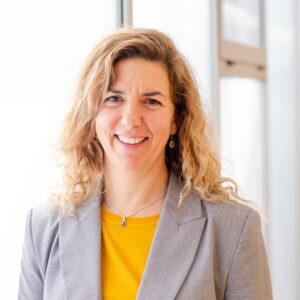
Prof. Guillermina Lopez Bendito Prof. Christian A. Lohmann
February 4, 2025 at 11:00am EST
Rodent and human-focused neuroscience often progress in parallel, however rodent models provide critical insights into neural activity and circuit formation that inform the FIT’NG community’s human studies. In this FIT’NG Together talk, Prof. Guillermina López-Bendito and Prof. Christian Lohmann, renowned leaders in developmental neuroscience, will explore these mechanisms and the role of spontaneous activity in brain development. Prof. Lohmann’s work examines synaptic plasticity and the shaping of neural circuits, while Prof. López-Bendito focuses on neural network dynamics and brain maturation using advanced imaging. This session aims to foster dialogue on bridging research across these complementary models.
FIT’NG Together
Family-Centered FIT Neuroimaging in Theory and Practice
Brittany Howell, PhD Oziomachukwu Chinaka, MPH, CHES®
November 12, 2024 at 11:00am EST
Conducting infant and children neuroimaging research poses unique challenges when recruiting and retaining. Unlike adults, the decision to participate in a study requires consent from the child’s guardians and family; because of this, it is important that researchers are mindful of the way they design their studies to include considerations for the whole family unit. This presentation will discuss what family centered approaches are and the utilization of these approaches as a method to support the recruitment and retention of families with particular focus on longitudinal studies.
FIT’NG Together: Elephants in the Room Round Table Series
Inclusive Innovations in FIT Neuroimaging
Speakers: Dr. Chiara Bulgarelli and Nwabisa Mlandu
Discussant: Dr. Sonya Troller-Renfree
Tuesday July 30 at 11 am EDT
FIT’NG presents an Elephants in the Room Round Table event on “Inclusive Innovations in FIT Neuroimaging” featuring panelists Dr. Chiara Bulgarelli and Nwabisa Mlandu and discussant Dr. Sonya Troller-Renfree. After brief presentations from the panelists on technological innovations to improve inclusivity of diverse participants in FIT neuroimaging research, we will transition to a Q&A moderated by Dr. Troller-Renfree with pre-planned questions followed by questions from the audience.
FIT’NG Together: Modality Introduction Series
Exploring the Potential of 2D and 3D Transfontanellar Ultrasound: Clinical Utility and Research Perspectives in Neonatal Neurology
Speaker: Dr. Isabel Benavente-Fernández
Tuesday June 11th at 11am EST
This talk delves into the applications and advancements of 2D and 3D transfontanellar ultrasound in neonatal neurology. It explores its clinical significance in diagnosing and monitoring neurological conditions in newborns, while also aiming its potential as a tool for innovative research in the field.
FIT’NG Together Modality Introduction Series
Towards automated analysis of the developing fetal brain from 3D ultrasound scans
Speaker: Dr. Madeleine K. Wyburd
Tuesday March 19th at 11am EST
Normal development of the human fetal brain can be characterized by precisely timed growth and folding of the cortical plate, with deviation often associated with poor cognitive outcomes. Thus, monitoring its development has the potential to be used as an early biomarker for neurodevelopmental impairment. However, to date, the only proposed 3D cortical analysis pipelines are for MRI and are incompatible with ultrasound: the modality of choice in prenatal care. Moreover, as MRI is not always suitable or available, the ability to characterise the cortex from routine ultrasound scans has the potential to change how we perform neurodevelopmental studies. In this talk, we present a fully automated deep-learning pipeline to do just that and validate our proposal on a large subset of 1703 fetuses.
FIT’NG Together Practicals Series
Tutorial on EEG Pre-Processing and Feature Extraction for Developmental Data using the Harvard Automated Processing Pipeline for Electroencephalography (HAPPE)
Laurel Gabard-Durnam PhD.
February 13, 2024 at 11:00am EST
FIT’NG presents a practical on the Harvard Automated Processing Pipeline for Electroencephalography (HAPPE), led by its creator, Laurel Gabard-Durnam PhD. HAPPE is a freely available software for EEG pre-processing and feature extraction (e.g., ERPs, power, microstates) optimized for data from FIT populations. Example data will be available to follow along during the tutorial.
Tutorial Materials
To get the most out of this tutorial we recommend setting up your materials before the tutorial begins so you can follow along with Dr. Gabard-Durnam!
- Install Matlab (required to run HAPPE)
- Download HAPPE from this link: https://github.com/PINE-Lab/HAPPE
- Download example data files (a.raw, b.raw and c.raw) from this link: https://zenodo.org/records/5931539
You’re all set, enjoy the tutorial!
FIT’NG Together Practicals Series
Open-access baby brains: Using fetal and neonatal developing Human Connectome Project (dHCP) data in your studies
Speakers: Dr. Slava Karolis, Dr. Siân Wilson and Dr. Jonathan O’Muircheartaigh
January 9, 2024 at 10:00am EDT
FIT’NG presents a FIT’NG Together Practicals Series event
Modality Introduction Series
The Basics of EEG
Speakers: Dr. Parvaneh Adibpour and Dr. Claire Kabdebon
Discussant: Genesis Flores
November 8, 2023 at 11:00am EDT
FIT’NG presents a Modality Introduction Series event
Modality Introduction Series
Speakers: Dr. Halie Olson and Dr. Cat Camacho
Discussant: Marta Korom
July 25, 2023 at 11:30am EDT
FIT’NG presents an Modality Introduction Series event
Elephants in the Room Series
Small Effect Sizes in FIT Brain-Behavior Associations
Dr. Judit Gervain & Dr. Scott Marek
May 15, 2023 at 11:00am EDT
FIT’NG presents an Elepahnts in thr Room Series event with an Expert Panel.
Paper Discussion partnered with FIT’NG Developmental EEG Workshop
Spectral parameterization for studying neurodevelopment: How and why
Dr. Brendan Ostlund
May 2, 2023 at 11:00am EDT
FIT’NG presents a Paper Discussion. Access the paper here: https://doi.org/10.1016/j.dcn.2022.101073
Paper Discussion partnered with FIT’NG Developmental EEG Workshop
Utility of linear mixed effects models for event-related potential research with infants and children
M.J. Heise
April 18, 2023 at 11:00am EDT
FIT’NG presents a Paper Discussion
Elephants in the Room Series
Impact of Sleep on FIT Neuroimaging Signal
Dr. Topun Austin, Dr. Louisa Gossé, & Dr. Fabrice Wallois
March 28, 2023 at 11:00am EDT
FIT’NG presents an Expert Panel
Elephants in the Room Series
Changes in Sleep during FIT Development
Dr. Salome Kurth, Dr. Rebecca Spencer, & Dr. Kimberley Whitehead
March 21, 2023 at 11:00am EDT
FIT’NG presents an Expert Panel
Diffusion Imaging Fall Series
Introduction to Diffusion Imaging in Infants
Martin Styner, PhD
October 11, 2022 at 12:00pm EST
Diffusion Imaging Fall Series
Introduction to infant automatic fiber quantification (AFQ)
Jason Yeatman, PhD; Mareike Grotheer, PhD; and John Kruper
November 1, 2022 at 12:00-1:30pm EST
Diffusion Imaging Fall Series
Introduction to TRActs constrained by UnderLying INfant anatomy (TRACULInA)
Chiara Maffei, PhD
November 29th, 2022 at 12:00-1:00pm EST
Practical
How to set up a multimodal observation lab
Reinhard Grassl – Mangold
November 15, 2022 at 12:00-1:30pm EST